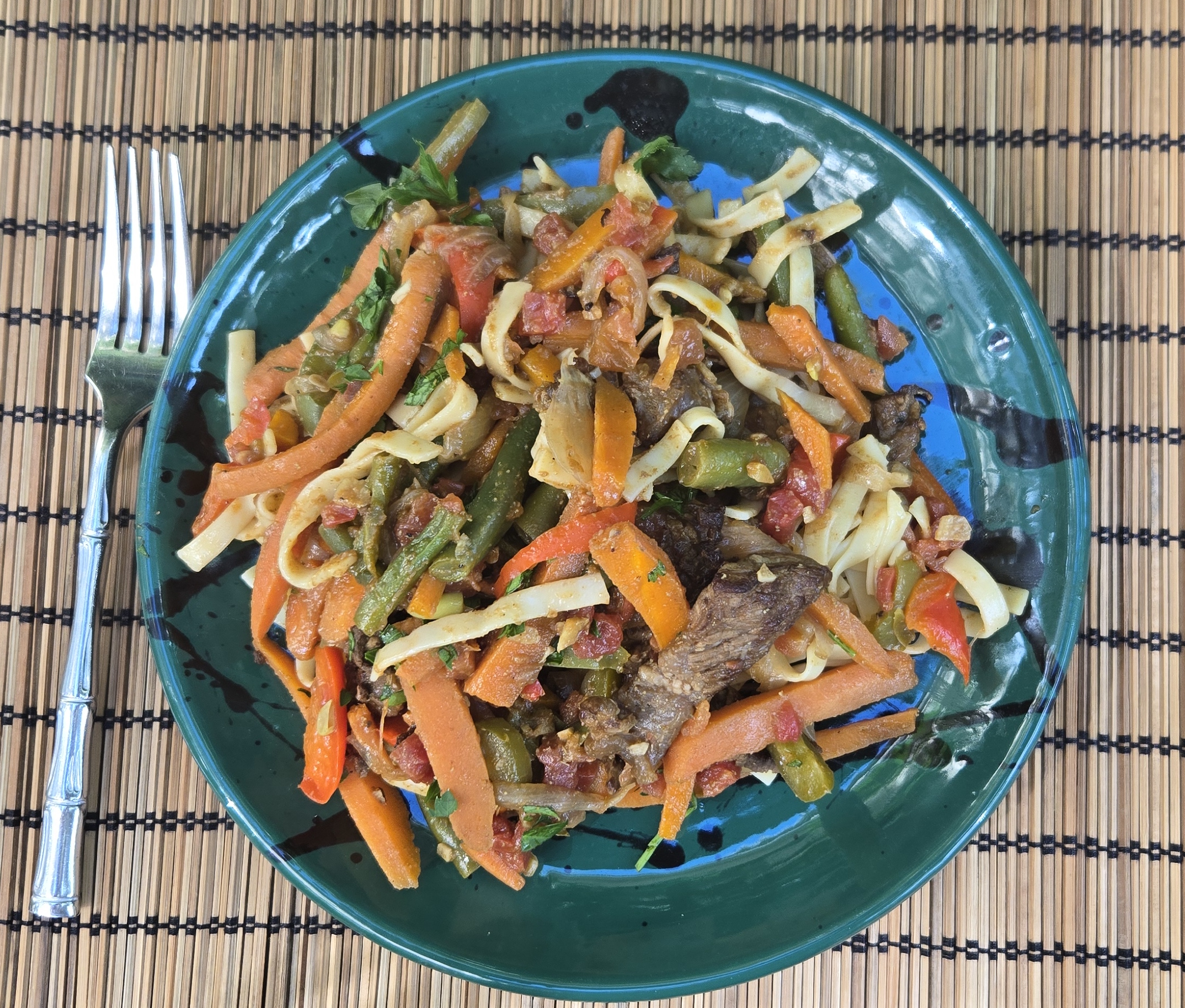
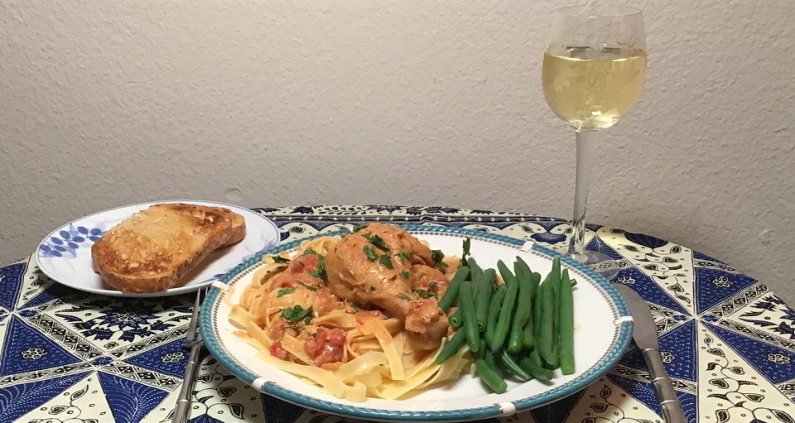
Hungarian Paprikás Csirke or "Chicken Paprikash requires only a few ingredients and simple to make, this is a great dish for when the weather turns chilly. As mentioned in our previous recipe for Goulash, Hungarians are rather fond of growing and consuming paprika. Please refer to that article for more cultural information about Hungary and its food. Many recipes for Paprikash stress that, unlike many other spices, paprika is best when it is relatively new. If you have an old can or jar of it that's been sitting in your kitchen cabinet for a while, it is advisable to purchase new. Paprika adds color and flavor to dishes, but the color will outlast the flavor if stored for a long time. This dish depends on the flavor of the Paprika. It can be either spicy or sweet paprika, or a combination of the two. Spicy paprika is very mild in comparison to chili powder, but it does have a little bite. If you only have the sweet variety, a pinch of cayenne powder with spice the dish up. Smoked paprika is another option. For a regional variation you can finely chop a red pepper and cook it with the onions. Many people enjoy the Pride of Szeged brand, which can be bought on Amazon.
Ingredients:
- 3 to 4 pounds chicken thighs and drumsticks, or whole chicken legs skin-on
- 1 tablespoon oil, or lard
- 1 large yellow onion, peeled and diced
- 3 cloves garlic, peeled and minced or crushed
- 3 tablespoons Hungarian paprika (Sweet or Hot), the best you can find.
- 3 tablespoons all-purpose flour
- 14 ounce canned crushed or finely diced tomatoes
- 1 cup chicken broth/stock
- 1 cup sour cream
- Salt and pepper to taste
- 1 pound of egg noodles
- 2 tablespoons unsalted butter
- 1/4 cup Italian parsley finely chopped
Preparation:
- Heat the oil or lard to medium-high heat in a Dutch oven or large heavy frying pan.
- Working in batches, brown the chicken on all sides.
- Set fried chicken pieces aside.
- Turn the heat under the pan to medium.
- Sauté the onion in the pan for 4 minutes.
- Add the garlic to the onions and fry for an additional 3 minutes.
- Sprinkle the paprika and flour over the onions and garlic, and cook for another 4 minutes.
- Add the diced/crushed tomatoes and the broth/stock to the pan and mix thoroughly.
- Cook for an additional half hour.
- Heat a large pot of water and cook the noodles according to package instruction.
- When the chicken and sauce are finished, mix in the sour creme.
- Salt and pepper the sauce to taste.*
- Drain the noodles and stir in the butter until it completely melted and mixed in.
- Serve the Paprikash over the buttered noodles and garnish with parsley.
* You may find it easier to temporarily remove the chicken from the sauce and then mix in the sour cream, salt and pepper. Afterward, return the chicken to the pot and make sure the pieces are well-coated with sauce.
* We are huge fans of Muhlen egg noodles which can be found at the Continent European Deli. You can also find German noodles at World Market for more money.
Recipe: T. Johnston-O'Neill
Photos: Shari K. Johnston-O'Neill

- Details
- Hits: 6083
- Signature Dishes from Around the World -
| ↓ Newest ↓ |
- Central Asian Laghman
- Chicken Florentine with Mornay Sauce
- Tahitian I'a Ota (Poisson Cru)
- Poulet au Vinaigre
- Levantine Sajiyeh Stir Fry
- Gulai Ayam Padang
- Manoomin (Ojibwe Wild Rice)
- Almafi Coast Linguine allo Scoglio
- Dezhou Braised Chicken
- Czech Smažený Sýr with Tatar Sauce
- Ugandan Rolex
- Pad Thai
- Portuguese Caldeirada
- Paraguayan Vori-Vori
- Sicilian Arancinii
- Greek Salantourmasi
- Fijian Kokoda
- Melanzane alla Parmigianaa
- Korean Kimchi Haemul Soondubu Jjigae
- Peruvian Tallarín Saltado Chifa
- Tanzanian Mchemsho with Ugali
- Irish Curry Chips
- Portuguese Bolinhos de Bacalhau
- Guyanese Pepper Pot
- Albanian Tave Kosi
- Ecuadorian Locro de Papas
- Tunisian Tajine Maadnous
- French Canadian Poutine
- Senegalese Poulet Yassa
- Cod with Thai Nam Jim Jeaw
- Greek Moussaka
- Mexican Barbacoa
- Iranian Kuku Sabzi
- Spanish Gambas al Ajillo
- Japanese Agedashi Tofu
- Turkey Tetrazinni
- Cuban Picadillo Habanero
- Salvadorian Pupusas with Curtido
- Italian Tomato, Onion, and Butter Pasta
- Middle Eastern Kofta Kebabs
- Thai Beef Satay
- Greek Revithia Soupa
- Flemish Waterzooi
- Andhra Style Green Chili Chicken
- Mauritian Bol Renversé
- Bánh Mì Gà Nướng
- Greek Walnut Cake (Karydopita)
- Japanese Tori no Karaage
- Malagasy Akoho Sy Voanio
- Icelandic Plokkfiskur
- Nigerian Suya and Zobo
- West Sumatran Udang Balado
- Norwegian Medisterkaker with Surkal
- French Galette Complète
- Hawaiian Saimin Noodles
- Japanese Gyudon with Onsen Tamago
- Thai Tom Kha Kai Soup (ต้มข่าไก่)
- Polish Gołąbki
- Korean Gilgeori Toast
- Hungarian Paprikás Csirke
- Chicken Marsala
- Chinese Scrambled Eggs & Tomato
- Bagels and Lox, the Full Schmear
- Thai Gai Pad Khing and Moo Satay
- Portuguese Caldo Verde
- Georgian Shkmeruli Chicken
- Tex-Mex Fajitas
- Hiroshima Okonomiyaki
- Chinese Long Life Noodles
- Greek Kotosoupa Avgolemon
- Ethiopian Doro Wat
- English Fish & Chips with Mushy Peas
- Korean Dolsot Bibimbap
- Mozambican Piri-Piri Chicken
- Hungarian Túrós Csusza
- Salvadoran Pupusa
- Thai Laap Pla
- Shakshuka with Feta Cheese
- Baghali Polow ba Mahichen
- Canarian Ropa Vieja
- Chinese New Year Noodles
- Danish Smørrebrød
- Russian Beef Stroganoff
- Hawaiian Loco Moco
- Mexican Pozole Rojo
- Brazilian Feijoada
- Spaghetti Alla Puttanesca
- Filipino Silog
- Arroz con Pollo
- Martiniquais Seafood Blaff
- Korean Fried Chikin
- Chinese Chow Fun Noodles
- Thai Kaeng Hung Le Curry
- Winter Holiday Drinks
- Sicillian Sfincione
- Indian Phirni and Skakkarpare
- Mexican Camarones en Aguachilie
- Ethiopian Kitfo
- Cornish Pasty
- Cuban Lechon Asado con Congri
- Chinese-American Egg Rolls
- Homemade Pizza
- Sri Lankan Curry
- Japanese Tonkatsu
- Vietnamese Phở Soup
- Chaniotiko Boureki
- South African Bunny Chow
- Empanadas Mendocinas
- Senegalese Thieboudienne
- Hainanese Chicken Rice
- Moqueca Seafood Stew from Bahia
- Chemmeen Curry from Kerala
- Filipino Ukoy Shrimp Fritters
- French Tarte Tatin
- Japanese Misoshiru Soup
- Swedish Meatballs (Köttbulla)
- Pomegranate Soup (Ash Anar)
- Pescao en Escabeche
- Rendang from West Sumatra
- South African Bobotie
- Quiche Lorraine
- Bacalhau Que Nunca Chega
- Turkish Yayla Çorbasi (Yoghurt/Rice Soup)
- Thai Curried Fish Mousse
- Salmorejo - Chilled Spanish Tomato Soup
- Bánh Xèo - Vietnamese Crepes
- Latkes (לאַטקע)
- Chongqing Hot Pot
- Turkish Menemen Eggs
- Iranian Tah-Chin Morgh
- Oaxacan Stew (Estofado de Oaxaca)
- Afghan Ravioli (Aushak)
- Sichuan Mapo Dofu
- Egyptian Vegetarian Koshari
- Singaporean Laksa Lemak
- Hungarian Goulash
- Afghan Qabili Palau
- Korean Patjuk and Kkaennip Jeon
- Italian Braciole
- Chicken Jalfrezi
- Japanese Good Fortune Sushi Rolls
- Surinamese Goedangan
- Persian Abgoosht with Doogh
- Pavlova from New Zealand
- Lahmacun or Turkish Pizza
- Coq au Vin
- Chicken Kapsa
- Zapallo and Lentil Stew with Maturana
- A Tasty Thai Trio
- Japanese Kare-Raisu
- Spanish Tortilla de Patata
- Hawaiian SPAM Musubi
- Filipino Pancit Bihon
- Pinchos Marunos with Saffron Allioli
- Kerala Chicken Stew (Koshi Ishtu)
- Ghormeh Sabzi with Keteh Rice
- Hawaiian Long Rice
- Moroccan Tagine
- Indian Burfi Sweets
- Classic Boeuf Bourguignon
- Swedish Lindström and Kåldolmar
- Hummus and Falafel
- Gỏi Cuốn Vietnamese Summer Rolls
- Russian Cheese Filled Eggplant Rolls
- Hiyashi Chuka (Chinese Chilled Noodle)
- Korean Bulgolgi with Banchan
- Balkan Burgers with Ajvar and Kajmak
- Provencal Ratatouille
- Chinese Fried Rice
- Classic New England Clam Chowder
- Italian Risotto with Fennel
- Japanese Oyako Donburi
- Macedonian Baklava
- Indonesian Martabak
- Pollo Encacahuatado
- Creole Jambalaya
- Laotian Chicken with Sticky Rice
- Moroccan B'stilla
- Korean Pa Jun
- Tex-Mex Stuffed Poblano Peppers
- Ukrainian Sweet & Savory Varenyky
- Oktoberfest Schnitzel and Spaetzle
- Thai Curry Deluxe
- South Indian Bisi Bele Bath
- Chinese-American Curried Beef Lo Mein
- Japanese Tempura
- Spanish Seafood Tortillitas
- Irish Potato & Leek Soup
- Moroccan Spiced Chicken
- Savory Thai Fish Cakes
- Russian Borscht
- Grilled Tandoori Chicken
- Turkish Shish Kabobs
- Jamaican Jerk Chicken
- Spanish Paella Times Two
- Yucatan Sopa de Lima
- Indonesian Sambal Goreng Telur
- Chickpea and Spinach Soup
- Greek Dolmathes
- Basmati Rice Salad
- Chinese Hot and Sour Soup
- Filipino Easy Adobo
- Javanese Gado-Gado
- Details
- Hits: 8378










San Diego Area Museums*
- African Museum - Casa del Rey Moro
- Barona Cultural Center and Museum
- California Center for the Arts
- California Children's Discovery Museum
- Centro Cultural De La Raza
- Chinese Historical Museum
- Heritage of the Americas
- J.A. Cooley Museum
- Japanese Friendship Garden
- Junípero Serra Museum
- Maritime Museum of San Diego
- Mingei International Museum
- Mission Trails Park Visitor Center
- Museum of Contemporary Art San Diego
- Museum of Making Music
- Museum of Photographic Arts
- Museum of Us
- New Americans Museum
- The New Children's Museum
- Oceanside Museum of Art
- Olaf Weighorst Museum
- Poway Heritage Museum
- San Diego Archaeological Center
- San Diego History Center
- San Diego Museum of Art
- Timken Museum of Art
- Villa Montezuma Museum
- Women's Museum of California
San Diego Galleries and Art Centers*
- Africa and Beyond
- Agora Galleries
- Arjang’s Treasure House of Fine Art
- Arredon Art Gallery
- ArtHatch
- Art Produce Gallery
- Art Scene West
- Back From Tomboctou
- Bazaar del Mundo
- Best Practice Art Gallery
- Bread and Salt
- Cosmopolitan Fine Arts
- David Alan Collection
- Distinction Gallery
- Emerald C Gallery
- Exclusive Collections Gallery-Gaslamp
- Front Porch Gallery
- Future is Color
- Gallery 21
- Gotthelf Art Gallery
- Ian Ely Gallery - La Jolla
- Krista Schumacher Art Gallery
- La Jolla Art Association
- La Playa Gallery
- Mandeville Art Gallery (UC San Diego)
- Meyer Fine Art
- Michael J. Wolf Fine Arts
- Michael Seewald Photography Gallery
- National Gallery of Fine Art La Jolla
- Oolong Gallery
- Quint Gallery
- RC Gorman Navajo Gallery - La Jolla
- Save Our Heritage Organization
- Scott White Contemporary Art
- Simic Galleries
- Sparks Gallery
- Spanish Village Art Center
- Tasende Gallery
- The Chuck Jones Gallery
- The Studio Door
- Thumbprint Gallery
- The San Diego Watercolor Society Gallery
- The In Gallery
- Tim Cantor Gallery
- Trash Lamb
- Visions Museum of Textile Art
- Wonderspaces San Diego
* That feature culturally-specific arts and artifacts
- Details
- Hits: 29277
CURRENT AND UPCOMING PRODUCTIONS AND PERFORMANCES
SAN DIEGO THEATERS AND COMPANIES
- 413 Repertory Theater
- Asian Story Theatre
- Backyard Renaissance Theatre Company
- Balboa and Civic Theatres
- Blindspot Collective
- Bocón Arts
- California Center for the Arts Theatricals
- Center Stage Productions
- Cinballera
- Common Ground Theatre
- Community Actors Theatre
- Coronado Playhouse
- Chronos Theatre Group
- Cultural Noire Performing Arts Company
- Cygnet Theatre
- Diversionary Theatre
- Jacobs Music Center
- La Jolla Playhouse
- Lamb’s Players Theatre
- Lamplighters Community Theatre
- Loud Fridge Theatre Group
- Moonlight Stage Productions
- Moxie Theatre
- New Village Arts
- North Coast Repertory Theatre
- Oceanside Theatre Company
- Old Globe Theatre
- Patio Playhouse
- Playwrights Project
- Point Loma Playhouse
- The Old Globe Theatre
- Poway OnStage
- PowPAC, Poway’s Community Theatre
- The Roustabouts Theatre Co.
- San Diego Junior Theatre
- San Diego Musical Theatre
- San Diego Repertory Theatre
- San Diego Shakespeare Society
- San Diego Urban Warriors Inc.
- Scripps Ranch Theatre
- Spreckels Theater
- Teatro Máscara Mágica
- Teatro San Diego
- Trinity Theatre Company
- TuYo Theatre
- Vantage Theatre
- Write Out Loud
- Young Actors Theatre
- Details
- Hits: 23448
Joomla!
Extensions
The Joomla! content management system lets you create webpages of various types using extensions. There are 5 basic types of extensions: components, modules, templates, languages, and plugins. Your website includes the extensions you need to create a basic website in English, but thousands of additional extensions of all types are available. The Joomla! Extensions Directory is the largest directory of Joomla extensions.
Components
Components are larger extensions that produce the major content for your site. Each component has one or more "views" that control how content is displayed. In the Joomla administrator there are additional extensions such as Menus, Redirection, and the extension managers.
Modules
Modules are small blocks of content that can be displayed in positions on a web page. The menus on this site are displayed in modules. The core of Joomla! includes 24 separate modules ranging from login to search to random images. Each module has a name that starts mod_ but when it displays it has a title. In the descriptions in this section, the titles are the same as the names.
Content Modules
Content modules display article and other information from the content component.
User Modules
User modules interact with the user system, allowing users to login, show who is logged-in, and showing the most recently registered users.
Display Modules
These modules display information from components other than content and user. These include weblinks, news feeds and the media manager.
Utility Modules
Utility modules provide useful functionality such as search, syndication and statistics.
Navigation Modules
Navigation modules help your visitors move through your site and find what they need.
Menus provide your site with structure and help your visitors navigate your site. Although they are all based on the same menu module, the variety of ways menus are used in the sample data show how flexible this module is.
A menu can range from extremely simple (for example the top menu or the menu for the Australian Parks sample site) to extremely complex (for example the About Joomla! menu with its many levels). They can also be used for other types of presentation such as the site map linked from the "This Site" menu.
Breadcrumbs provide users with information about where they are in a site.
Page 31 of 32