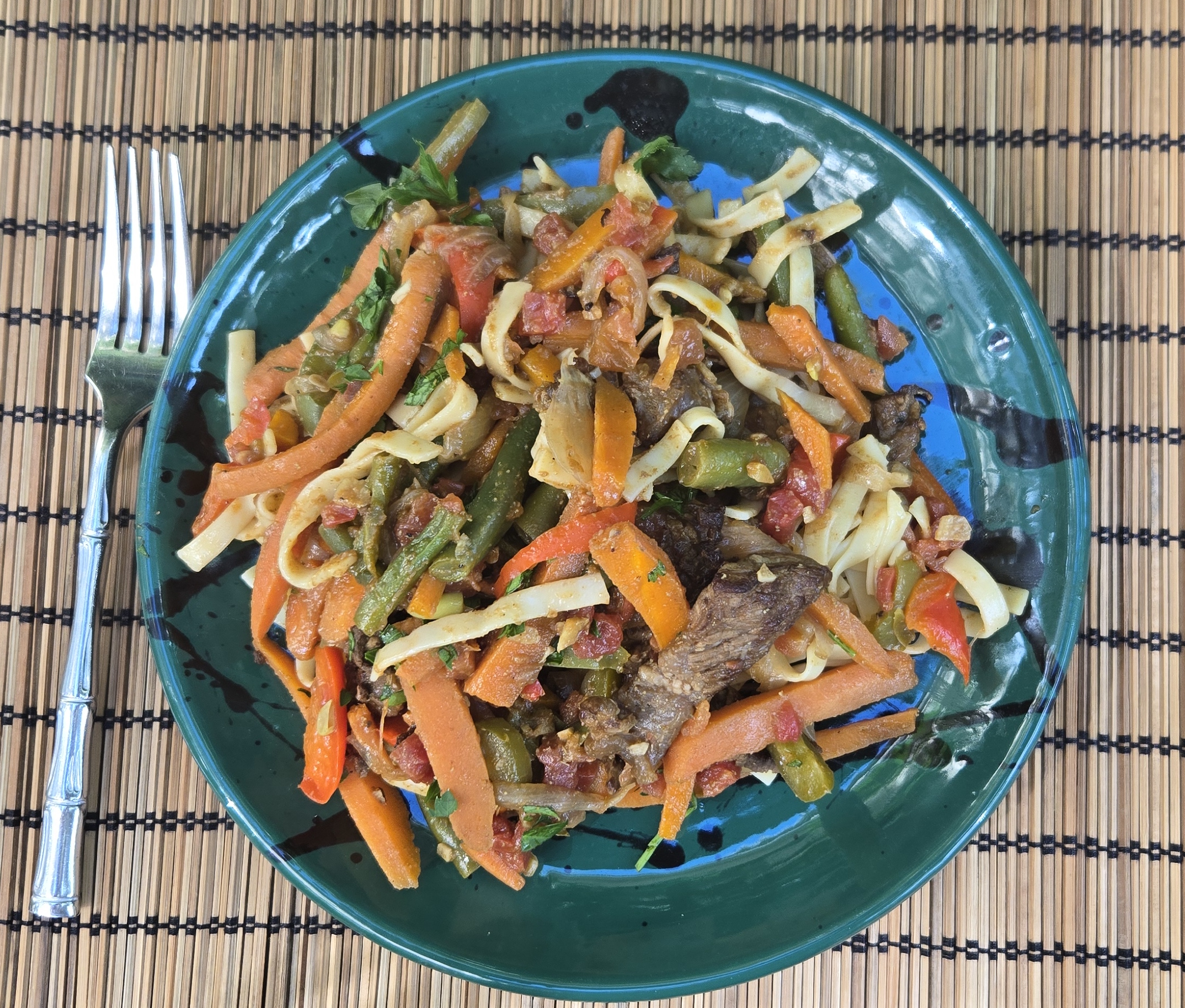
Our recipe for this month is Laghman, a hearty Central Asian noodle dish with tender beef, vegetables, tomatoes, and fragrant spices. No special techniques or equipment are needed and all the ingredients can be found in any grocery store.
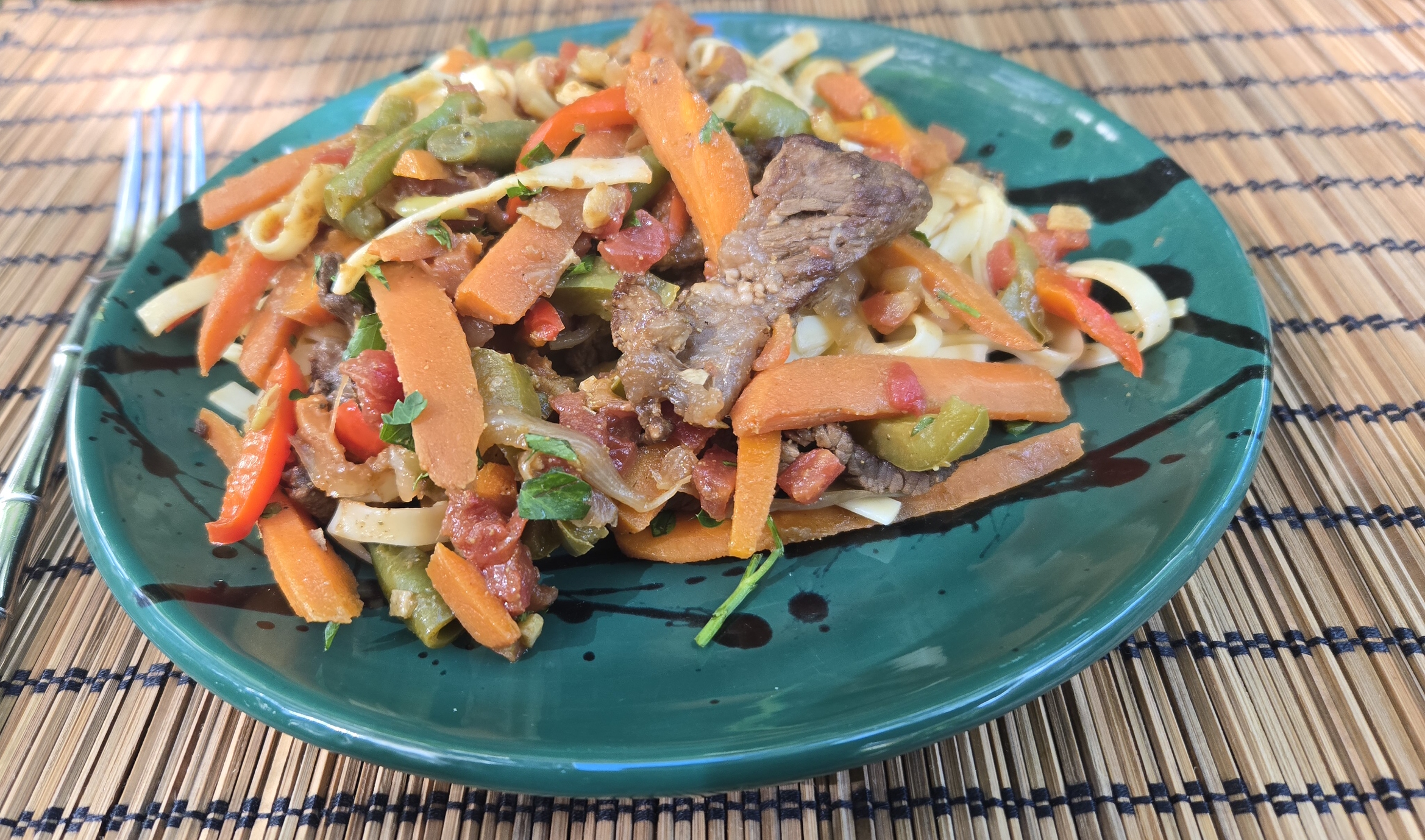
Laghman, also spelled Lagman or Laghmon, is one of the great noodle dishes of Central Asia. It is especially associated with Uyghur cooking, but it is also widely prepared in Uzbekistan, Kyrgyzstan, Kazakhstan, Tajikistan, and neighboring regions.
The Silk Road was far more than a trade route. It was a vast network of caravan trails over which merchants, migrants, pilgrims, and conquerors carried goods, ideas, technologies, religions, and cultures across Eurasia. Although silk gave the route its name and remained one of its most prized commodities, over the centuries enormous quantities of tea, spices, cotton textiles, wool, carpets, porcelain, paper, glassware, metals, and horses also traveled between eastern China and the eastern Mediterranean. The Silk Road became a powerful conduit for cultural exchange, influencing art, religion, language, and, of course, cuisine, often resulting in the birth of new traditions. Laghman is one delicious example of this blending of traditions, combining Chinese-style wheat noodles with the meats, vegetables, and aromatic spices that characterize Central Asian cooking.
Traditional Laghman is made with hand-pulled wheat noodles. Skilled cooks stretch, twist, fold, and slap the dough until it becomes long, elastic strands. However, fresh noodles of any kind may be substituted. We used German egg noodles for no other reason than we love their taste and texture!
Laghman is sometimes served as a brothy noodle soup and sometimes as a thick stew ladled over noodles. Uyghur versions often contain many vegetables, including peppers, celery, tomatoes, garlic, and green beans. Uzbek versions are often heartier and may include carrots, potatoes, beef, and a thicker sauce. We decided on this recipe so we could take it to the Worldview Project book club when we will discuss the book A Carpet Ride to Khiva: Seven Years on the Silk Road which is about an English aid worker who lived and worked in Uzbekistan.
The seasoning varies by region and household, but cumin is essential for any Laghman. Garlic, black pepper, coriander, paprika, and chili are all popular enhancements.
Cook's Notes:
For the quickest cooking, use top sirloin, strip steak, flat iron steak, or flank steak sliced thinly across the grain. Chuck roast has excellent flavor but requires much longer cooking.
Browning the meat well is important. If the pan is crowded, the beef will steam instead of sear.
Like so many other dishes from other lands, Laghman tastes better the day after it is first prepared!
Ingredients
- 1 1/2 pounds beef sirloin, top sirloin, flank steak, or strip steak, cut into thin bite-sized strips
- 2 tablespoons vegetable oil
- 1 large onion, sliced and then cut into smaller pieces
- 4 cloves garlic, minced
- 2 carrots, julienned or sliced thin
- 1 red bell pepper, sliced
- 1 green bell pepper, sliced
- 2 cups green beans, cut into 1-inch pieces
- 2 medium tomatoes, diced (or 1 14-ounce can)
- 2 tablespoons tomato paste
- 4 cups beef stock
- 2 teaspoons ground cumin
- 1 teaspoon smoked paprika
- 1/2 teaspoon ground coriander
- 1/2 teaspoon freshly ground black pepper
- 1/4 teaspoon cayenne pepper, optional
- 2 bay leaves
- Salt, to taste
- 1 pound fresh wheat noodles, fresh ramen noodles, or thick spaghetti
- 1/4 cup chopped cilantro
- 2 green onions, sliced
- Chili oil, optional
Preparation
- Heat the oil in a large Dutch oven, heavy pot or pan (I used a cast iron skillet) over high heat.
- Brown the beef quickly, working in batches if necessary. Remove the beef and set aside.
- Reduce the heat to medium-high.
- Add the onion and cook until it begins to brown.
- Add the garlic, and carrots. Cook for 4–5 minutes.
- Add the bell peppers and green beans. Cook for another 3 minutes.
- Stir in the diced tomatoes, tomato paste, cumin, paprika, coriander, black pepper, and cayenne if using.
- Cook until the tomatoes begin to break down, about 5 minutes.
- Return the beef to the pot.
- Add the beef stock and bay leaves.
- Bring to a gentle simmer.
- Cook for 20–30 minutes, or until the beef is tender. If using chuck roast, simmer for 1 1/2–2 hours.
- Taste and adjust the salt and spices.
- Cook the noodles according to package directions.
- Drain the noodles but do not rinse them.
- Place noodles in each serving bowl.
- Ladle the beef and vegetable sauce over the noodles.
- Top with cilantro, green onions, and chili oil if desired.
Serve hot, with pickled vegetables, fresh cucumbers, tomatoes, or crusty bread.
Yoqimli ishtaha! (lit. "pleasant appetite" or "bon appétit!" in Uzbek.
Recipe: T. Johnston-O'Neill
Photos: Shari K. Johnston-O'Neill