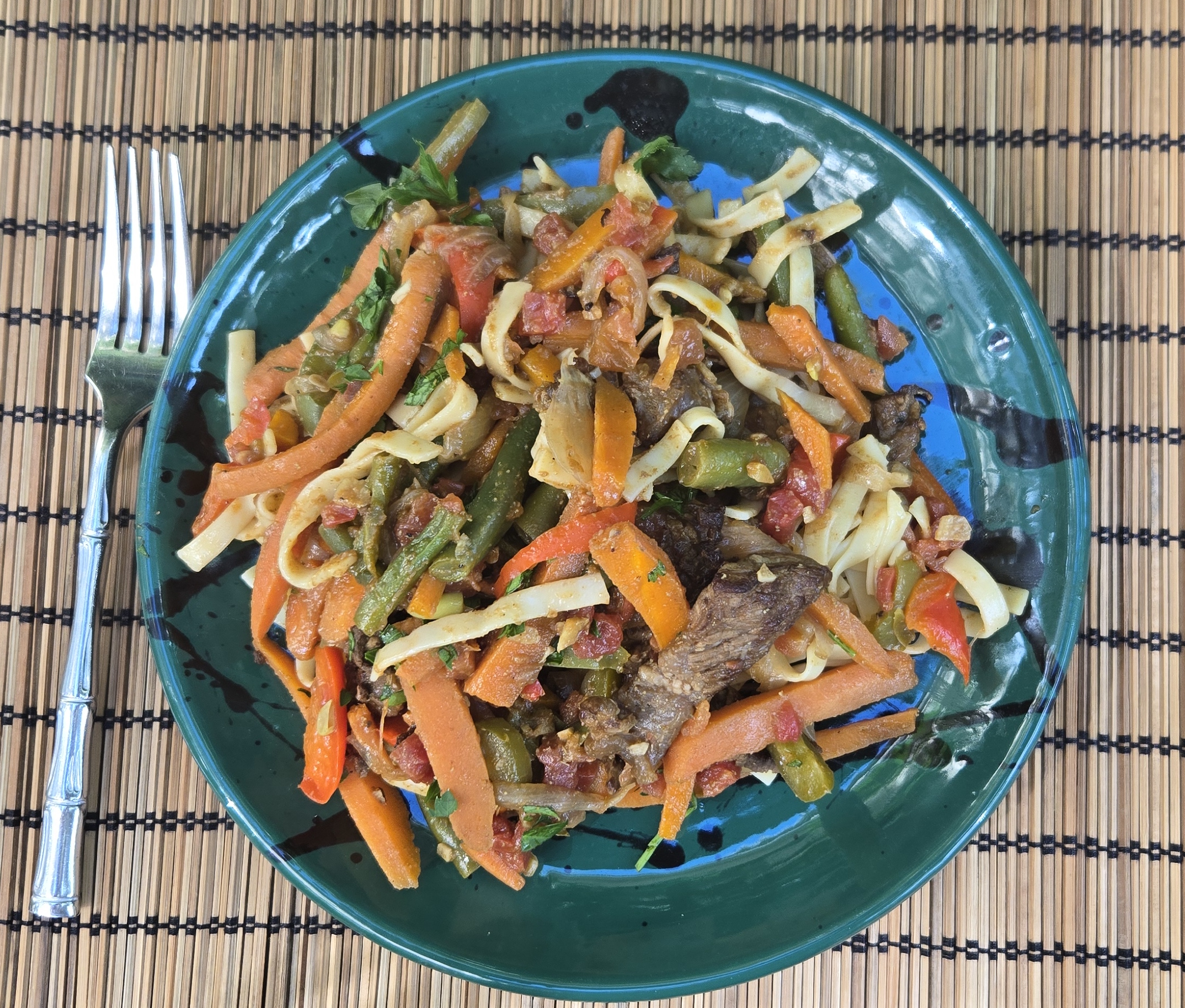
In celebration of Native American Month, our Recipe of the Month is for Manoomin with Berries and Nuts, a traditional Ojibwe wild rice dish that’s easy to prepare and offers a very unique mix of earthy, nutty, and subtly sweet flavors.

Manoomin, otherwise known as “wild rice,” is a deeply important food and sacred plant for the Ojibwe (Anishinaabe) people, who live throughout the lake and forest regions of the upper Great Lakes—particularly in northern Minnesota, Wisconsin, Michigan, and southern Canada.
Indeed, these vast lake and forest lands are often referred to as the Manoomin Corridor, a region where the natural abundance of wild rice has shaped Ojibwe culture, spirituality, and sustenance for countless generations.
Manoomin holds deep spiritual and cultural meaning among the Ojibwe, extending far beyond its value as food. In Ojibwe tradition, manoomin is considered a sacred gift from the Creator and is central to one of their most important migration prophecies. According to oral history, the Anishinaabe were instructed to move westward from the Atlantic coast until they reached the place “where food grows on the water.” When they arrived at the Great Lakes and found manoomin growing in abundance, they knew they had reached the land foretold to them.
Manoomin is treated not as a crop, but as a living relative—something to be cared for, respected, and never exploited. Its harvest is governed by traditional laws and ceremonies. Harvest season begins with an offering of tobacco and prayers to give thanks and to ask permission from the spirit of the rice and the water. The first harvest of the season is often shared communally or given away, a way of showing gratitude before any is kept for personal use.
The harvest itself follows long-established practices. Pairs go out in canoes: one person poles gently through the rice beds while the other uses two wooden “ricing sticks” (bawa’iganaak) to bend the stalks over and tap the ripe grains into the canoe. This method ensures that much of the rice remains standing to reseed the lake. After gathering, the rice is dried and parched over low heat, then “danced” or tread upon to remove the hulls—often accompanied by songs and communal celebration.
Manoomin feasts are part of seasonal gatherings, weddings, and ceremonies of thanks, and it is frequently served at funerals and memorials to honor ancestors. Its presence symbolizes continuity, generosity, and the bond between people and the natural world. Because of this, protecting wild rice beds from pollution, shoreline development, and commercial over-harvesting has become a major cultural and environmental concern for many Ojibwe communities.
In short, manoomin is more than sustenance—it is a sacred connection between the Ojibwe, their history, and the living landscape that continues to sustain them.
Botanically, true wild rice—Zizania palustris—is not a variety of Oryza sativa, the Asian rice commonly found in stores, but an aquatic grass native to North America. It grows naturally in cool, shallow lakes with clean shorelines and steady water levels. Hand-harvested lake rice cooks faster, stays slender, and carries a subtle aroma of lake and smoke, while cultivated rice is darker, tougher, and slower to open. Traditional Ojibwe cooking pairs manoomin with simple, natural foods like game broth, wild onions, mushrooms, cranberries, and maple sugar or syrup. Often the same rice served in a feast becomes a breakfast porridge the next morning, sweetened with berries and maple. The recipe that follows keeps that balance—savory, earthy, and gently sweet—using ingredients accessible to most kitchens.
Notes on Ingredients:
Traditional Ojibwe food draws directly from the forests, lakes, and prairies of the Great Lakes region, and some of its ingredients can be hard to find outside those environments. This dish allows flexibility while honoring that heritage.
Oil or fat: Rendered duck fat is traditional where waterfowl were plentiful and gives a distinct richness. Sunflower oil is another culturally rooted option, as Indigenous peoples have long grown and used sunflower seeds. For modern kitchens, any neutral oil such as canola or grapeseed works well.
Berries: Dried blueberries and cranberries are the most typical choices and are easy to find. Historically, Ojibwe cooks also used chokecherries, serviceberries, and wild raspberries, all of which can substitute if available. Some traditional recipes also call for making a tea of sumac berries (boil in water and then strain) adding the liquid to the broth you cook the manoomin in.
Mushrooms: Wild varieties such as morels, chanterelles, or puffballs were often foraged and remain the most authentic. When these are unavailable, cultivated mushrooms like cremini, oyster, or button make fine replacements. (We used bellla and oyster mushrooms).
Nuts: Wild hazelnuts are native to Ojibwe lands and are the most traditional choice. If they’re not accessible, walnuts, pecans, or almonds can be used instead. Lightly roasting them before adding to the dish enhances flavor and aroma.
Ingredients
- 1 cup wild rice
- 3 cups water or broth
- Salt to taste
- 2 tablespoons rendered duck fat or sunflower oil (sub: neutral oil)
- 1 scallion sliced thin.
- 1–1.5 cups sliced mushrooms
- 1/2 cup dried berries.
- 1/2 cup chopped roasted nuts
- 3 tablespoons maple syrup
- Salt and pepper to taste.
Preparation
- In a medium pot, bring the water or broth and salt to a boil. Add the wild rice, reduce to a simmer, cover, and cook until tender but slightly chewy—about 40–50 minutes. Drain excess liquid if needed.
- Meanwhile, heat the duck fat or oil in a skillet over medium heat. Sauté the onions until soft, then add mushrooms and cook until lightly browned.
- Add the dried berries to the skillet and stir for about 1 minute to plump them slightly.
- Stir in the cooked wild rice and chopped nuts. Drizzle with maple syrup, season with black pepper and salt to taste, and mix until evenly combined.
- Remove from heat and serve warm as a side or main dish.
Mino-wiisini! (Eat well.)
Recipe: T. Johnston-O'Neilll
Photos: Shari K. Johnston-O'Neill